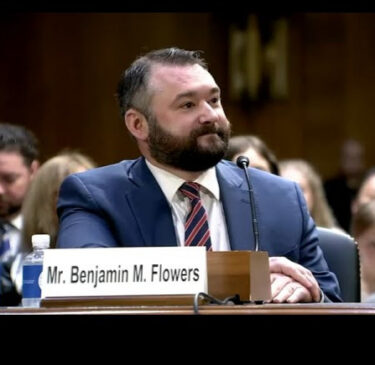
NCJW opposes Benjamin Flowers. Here’s why:
Benjamin Flowers has a record that raises serious concerns about his fitness for a lifetime appointment to the federal bench. Throughout his career, he has repeatedly advanced legal arguments that would narrow longstanding constitutional protections, restrict access to reproductive health care, weaken safeguards for voting rights, and limit protections for LGBTQ+ individuals. Rather than demonstrating a commitment to preserving established rights and ensuring equal access to justice, his record reflects an eagerness to revisit settled precedent and support legal theories that would roll back protections relied upon by millions of Americans. Taken together, these positions raise significant questions about his ability to serve as a fair and independent jurist committed to upholding the rights and freedoms guaranteed by the Constitution and federal law.
Reproductive Rights
As Ohio’s Solicitor General, Mr. Flowers argued before the Ohio Supreme Court to revive the state’s six-week abortion ban, which prohibited abortion before many people even know they are pregnant. He argued in defense of an Ohio law that criminalized abortion care based on the perceived reason that an abortion is sought, and urged an end to established abortion protections for pregnant patients, arguing that a weaker legal standard be applied. As Counsel of Record he petitioned the US Supreme Court to revoke a lower court’s award of attorneys fees to Planned Parenthood and, in another case, Mr. Flowers defended the Trump administration’s ‘gag rule’ on Title X family planning clinics.
Constitutional Rights
During the 2025-26 US Supreme Court term, Mr. Flowers was lead counsel on a number of amicus briefs. In Barbara v. Trump, he argued in favor of stripping citizenship from children whose parents were not citizens at the time of the child’s birth. In Louisiana v. Callais, the voting rights case, he urged the court to overturn years of precedent and abandon the Gingles test, which the Court has long used to adjudicate whether state redistricting impermissibly dilutes the votes of minority voters. Also, in the cases involving young trans students participating in school sports, he claimed that neither Title IX or the Equal Protection Clause bar schools from keeping transgender students from athletics.
Education and Career Highlights:
Benjamin Flowers received a BA from the Ohio State University in 2009 and a JD from the University of Chicago Law School in 2012. After law school he clerked for Judge Sandra Segal Ikuta on the Ninth Circuit for a year and then worked at Sidley Austin, after which he clerked for Justice Scalia on the Supreme Court in 2014. Following that, he was an associate at Jones Day before joining the Ohio Attorney General’s Office as first deputy solicitor general and then solicitor general starting in 2019. Since 2023 he has been a partner at Ashbrook Bryne Kresge Flowers.